
MAPPING LONDON’S EMOTIONS
A few years ago, a group of researchers from the Stanford Literary Lab decided to use topic modelling to extract geographical information from nineteenth-century novels. Though the study was eventually abandoned, it had revealed that London-related topics had become significantly more frequent in the course of the century, and when some of us were later asked to design a crowd-sourcing experiment, we decided to add a further dimension to those early findings, and see whether London place-names could become the cornerstone for an emotional geography of the city.footnote1 In the Atlas of the European Novel, Franco Moretti had already worked on the geography of London, mapping residences in Dickens and crimes in Conan Doyle. But emotions have a more elusive reality than buildings or murders, and only one of the Atlas’s hundred images—a map of foreign ideas in Russian novels—was somewhat comparable to the current project. To further complicate matters, when Moretti had shown that image to Serge Bonin, the historical geographer who was advising him about the Atlas, Bonin had been extremely critical: ideas like ‘materialism’ or ‘equality’ were not ortgebunden, as German geographers would say: they didn’t have that intrinsic connection to a specific place which is the basis of every real map. And if ideas were not mappable, how could emotions be?
 Semantic Network Analysis of Contested Political Concepts
  The Uses of Genre: Is There an “Adam Smith Question”?
  Humanistic infrastructure studies: hyper-functionality and the experience of the absurd
  Into the archive of ubiquitous computing: the data perfect tense and the historicization of the present
  Provincializing Enlightenment: “Edinburgh” Historicism and the Blackwoodian Regional Tale
 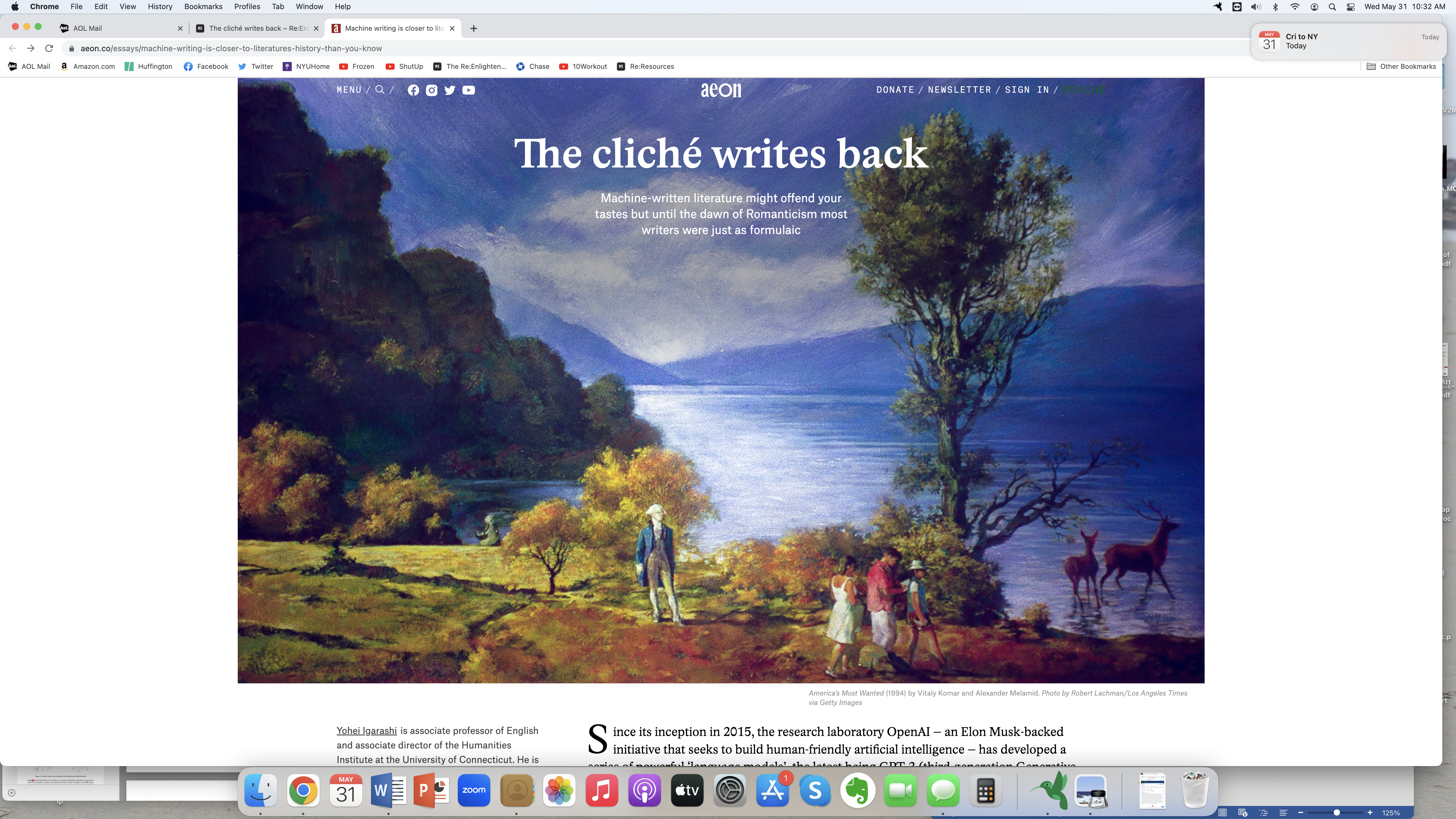 The cliché writes back
  BRIEF ENCOUNTERS: EDUCATIONAL STUDIES AND THE PUBLIC INTELLECTUAL
 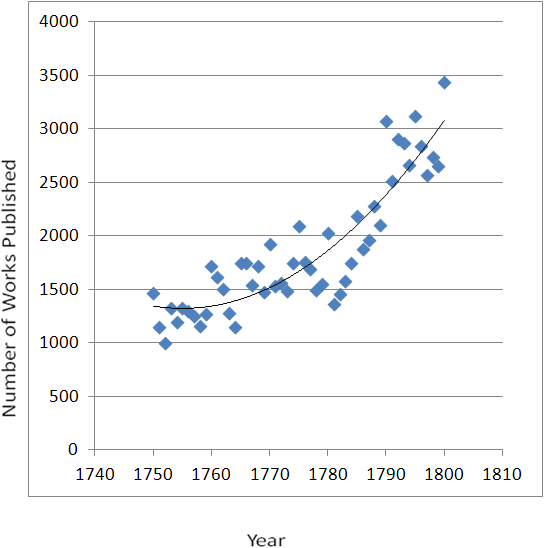 Acts of Aesthetics: Publishing as Recursive Agency in the Long Eighteenth Century
  On Paragraphs. Scale, Themes, and Narrative Form
  James Hogg and the Medium of Romantic Prose
  Computing Koselleck: Modeling Semantic Revolutions, 1720-1960
  Abstraction: A Literary History