
Ends of Enlightenment
Ends of Enlightenment explores three realms of eighteenth-century European innovation that remain active in the twenty-first century: the realist novel, philosophical thought, and the physical sciences, especially human anatomy. The European Enlightenment was a state of being, a personal stance, and an orientation to the world. Ways of probing experience and knowledge in the novel and in the visual arts were interleaved with methods of experimentation in science and philosophy. This book’s fresh perspective considers the novel as an art but also as a force in thinking. The critical distance afforded by a view back across the centuries allows Bender to redefine such novelists as Defoe, Fielding, Goldsmith, Godwin, and Laclos by placing them along philosophers and scientists like Newton, Locke, and Hume but also alongside engravings by Hogarth and by anatomist William Hunter. His book probes the kinship among realism, hypothesis, and scientific fact, defining in the process the rhetorical basis of public communication during the Enlightenment.
 Theatre & the digital
 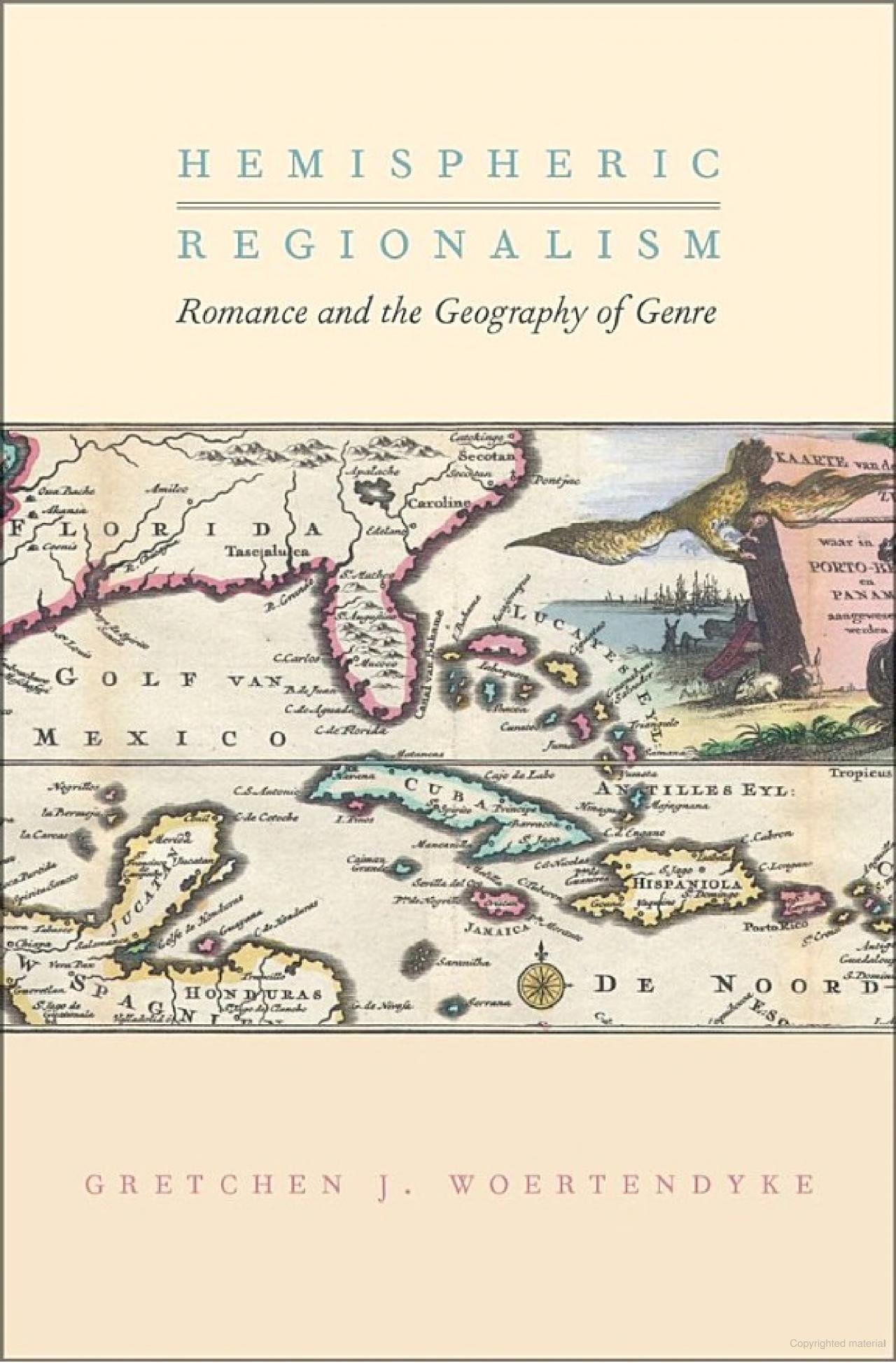 Hemispheric Regionalism
  Protocols of Liberty: Communication Innovation & the American Revolution
  The Reading Nation in the Romantic Period
 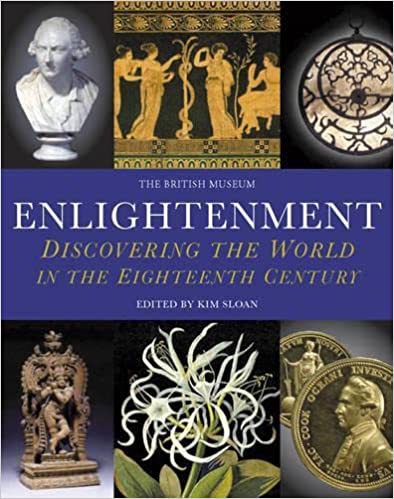 Enlightenment
 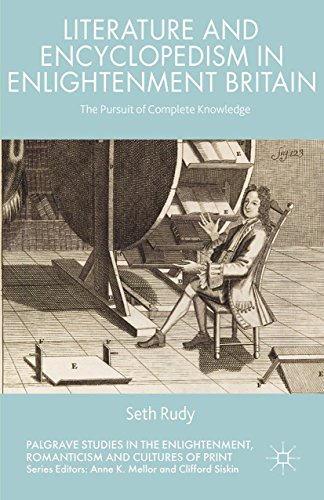 Literature and Encyclopedism in Enlightenment Britain: The Pursuit of Complete Knowledge (Palgrave Studies in the Enlightenment, Romanticism and Cultures of Print)
 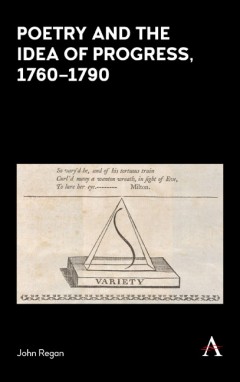 Poetry and the Idea of Progress, 1760–90
  The Ends of Knowledge: Outcomes and Endpoints Across the Arts and Sciences
 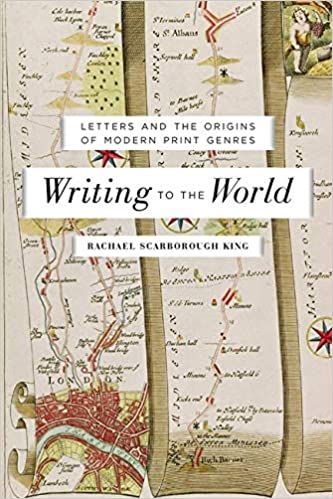 Writing to the World: Letters and the Origins of Modern Print Genres
  Conceptualizing the World: An Exploration across Disciplines (Time and the World: Interdisciplinary Studies in Cultural Transformations Book 4)